با آرزوی سلامتی و شادکامی برای شما در این روزهای سخت
لطفا برای برگزاری جلسات درمانی خود 1) در ابتدا فایل راهنمای استفاده از اسکای روم مرتبط به جلسات خود را دانلود و مطالعه بفرمایید ، 2) سپس بر روی لینک اتاق جلسات که با نام درمانگر میباشد کلیک نمایید و به عنوان میهمان وارد اتاق جلسات شده و جلسات خود را برگزار نمایید.
با سپاس از همکاری و همیاری شما.
دانلود فایل راهنمای استفاده از اسکای روم مراجعین محترم هیلان
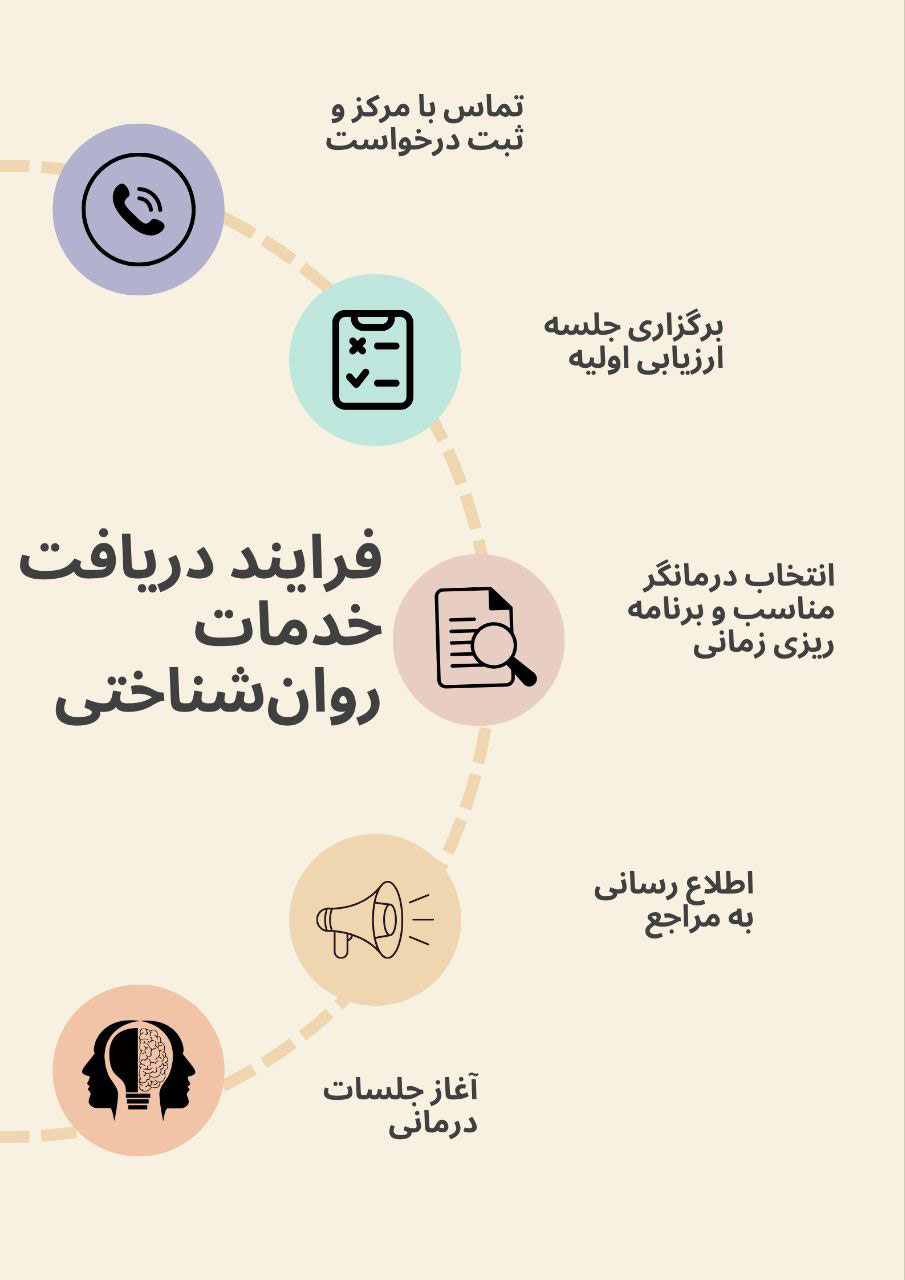
از اینکه برای دریافت خدمات روانشناسی کلینیک روان شناسی هیلان را انتخاب کردید، خرسندیم و امیدواریم بتوانیم پاسخگوی اعتماد شما باشیم. متن پیشرو به شما کمک می کند که از چگونگی دریافت رواندرمانی در کلینیک مطلع شوید.
ابتدا باید درخواست خود را بوسیله یکی از سه راه زیر ثبت کنید:
الف) با شمارۀ 02144424324 یا 02144451619 تماس بگیرید.
ب) به شمارۀ 09102904298 در تلگرام پیام بدهید.
ج) به فرم زیر مراجعه کنید و فرم درخواست رواندرمان را تکمیل کنید.
برگزاری جلسه ارزیابی اولیه
بعد از اینکه نام و اطلاعات تماس شما ثبت شد، ظرف 1 الی 2 روز همکاران ما با شما تماس میگیرند تا یک جلسۀ ارزیابی 30 دقیقهای را با شما هماهنگ کنند. این جلسه غالباً به صورت انلاین و تصویری برگزار میشود و ارزیاب، علت مراجعۀ شما، سوابق مراجعههای قبلی، انتظارات درمانی و ... را جویا میشود. هدف از برگزاری جلسه ارزیابی موارد زیر است:
مشخص شود مراجع درخواست چه نوع خدماتی را دارد و آیا این خدمات در کلینیک هیلان ارائه می شوند؟
با توجه به ماهیت مشکل، درمانهای دریافت شده قبلی و انتظارات و توقعات مراجع کدامیک از رواندرمانگران انتخاب بهتری هستند؟
آیا مراجع همزمان علاوه بر رواندرمانی فردی به خدمات دیگری مثل خانوادهدرمانی، زوجدرمانی و ... نیاز دارد؟
و ... موارد خاص هر مراجع می تواند در نظر گرفته شود
انتخاب درمانگر مناسب و برنامهریزی زمانی
بعد از برگزاریِ جلسۀ ارزیابی، همکاران واحد پذیرش با شما تماس خواهند گرفت تا درمانگرانِ پیشنهادی کلینیک را به اطلاع شما برسانند و ساعت و روز جلسه را با شما هماهنگ کنند. جلسات بسته به ترجیح شما میتواند حضوری یا آنلاین باشند.
آغاز جلسات
روز و ساعتی که با شما هماهنگ شده ثابت است و هر هفته در زمان مقرر برگزار خواهد شد. زمان و برنامه ثابت بخش مهمی از فرایند درمان است. در این مسیر، مسئولین فنی کلینیک در کنار شما خواهند بود؛ در صورت بروز هرگونه مشکلی ابتدا می توانید با مسول ذیرش تماس بگیرید و در موارد خاص و مورد نیاز می توانید با مسول فنی کلینیک هیلان برای حل مشکل مذاکره کنید. فرایند فوق را به صورت خلاصه می توانید در عکس زیر مشاهده کنید.
در زندگی درد کشیدن گریزناپذیر است. عزیزی را از دست می دهیم، شیء با ارزشی را گم می کنیم، خواسته ای که چندین ماه است برای دستیابی به آن تلاش کرده ایم، ناکام می ماند و اتفاقات دیگری که در گذر سال های عمر، درد و فشار زیادی را به ما وارد می کنند. اما چه می شود که دردهای روزمره زندگی، از ظرفیت تحمل ما خارج می شوند و طبیعت زندگی را به امری دردناک تبدیل می کنند؟
در بدو امر باید توجه کنیم که میان دردهای هر روزه با رنج کشیدن مزمن، تفاوت قابل توجهی وجود دارد. زمانی که دردهایمان را نمی بینیم، از تجربه شان در این لحظه اجتناب می کنیم و خود و دیگری را به طور مداوم به خاطر احساسات دردناکمان سرزنش می کنیم، دردهای زودگذر به زخم های عمیقی تبدیل می شوند که برای ترمیم شان به نیرویی مضاعف نیاز پیدا می کنیم. در اینجاست که روان درمانی و مشاوره معنا پیدا می کنند. روان درمانی حضوری امکانی برای مشاهده، توجه و ترمیم مشفقانه ی زخم هایی است که سالیان پی در پی به خاطر آنها رنج زیادی را متحمل شده ایم.
رواندرمانی آنلاین
همه ی ما افکار، رفتارها و الگوهای تکرارشونده ای داریم که در زندگی و روابط مان تداخل ایجاد ما کنند. در هیلان باور داریم که گفتگو و مشاوره با درمانگر بایستی به اندازه ی امور روزمره ی زندگی مان قابل دسترس باشد. درمان مختص گروه خاصی از افراد نیست که از پریشانی و استرس مداوم رنج می برند؛ ما باور داریم که درمان برای همه ی ما منافعی به همراه دارد. هیلان درمان آنلاین را بعنوان منبعی برای ارتباط و حمایت در سراسر جهان پیشنهاد می کند.
درمان آنلاین تقریبا خدمت جدیدی در حوزه سلامت روان است که در آن درمانگر یا مشاور، خدمات و حمایت های روانشناختی را از طریق اینترنت ارائه می دهد. این درمان می تواند از طریق ایمیل، ویدئوکنفرانس یا تماس اینترنتی انجام شود. درمان آنلاین مانند جلسه رو در روی روان درمانی است که در آن درمانگر و مراجع در مورد مسائل و تعارضات بنیادین مراجع صحبت می کنند و مداخلات در لحظه اتفاق می افتد، با این تفاوت که همه اتفاقات در فضای مجازی رخ می دهد.
Dimitrijević, A., Hanak, N., Altaras Dimitrijević, A., & Jolić Marjanović, Z. (2018). The Mentalization Scale (MentS): A Self-Report Measure for the Assessment of Mentalizing Capacity. Journal of Personality Assessment, 100(3), 268-280. https://doi.org/10.1080/00223891.2017.1310730
Asgarizadeh, A., Vahidi, E., Seyed Mousavi, P. S., Bagherzanjani, A., & Ghanbari, S. (2023). Mentalization Scale (MentS): Validity and reliability of the Iranian version in a sample of nonclinical adults. Brain and Behavior, 13, e3114. https://doi.org/10.1002/brb3.3114
Hausberg, M. C., Schulz, H., Piegler, T., Happach, C. G., Klöpper, M., Brütt, A. L., Sammet, I., & Andreas, S. (2012). Is a self-rated instrument appropriate to assess mentalization in patients with mental disorders? Development and first validation of the Mentalization Questionnaire (MZQ). Psychotherapy Research, 22(6), 699-709. https://doi.org/10.1080/10503307.2012.709325
Asgarizadeh, A., Sharp, C., & Ghanbari, S. (2023). Shame-coping clusters: comparisons regarding attachment insecurities, mentalizing deficits, and personality pathology, controlling for general emotion dysregulation. Borderline Personality Disorder and Emotion Dysregulation, 10(1), 25. https://doi.org/10.1186/s40479-023-00231-2
Pajulo, M., Tolvanen, M., Karlsson, L., Halme-Chowdhury, E., Öst, C., Luyten, P., Mayes, L., & Karlsson, H. (2015). THE PRENATAL PARENTAL REFLECTIVE FUNCTIONING QUESTIONNAIRE: EXPLORING FACTOR STRUCTURE AND CONSTRUCT VALIDITY OF A NEW MEASURE IN THE FINN BRAIN BIRTH COHORT PILOT STUDY. Infant Mental Health Journal, 36(4), 399-414. https://doi.org/10.1002/imhj.21523
Vahidi, E., Ghanbari, S., Seyed Mousavi, P. S., & Safari, F. (2023). Psychometric properties of the prenatal-parental reflective functioning questionnaire in Iranian mothers and fathers. Current Psychology, 42(7), 5629-5637. https://doi.org/10.1007/s12144-021-01909-y
Luyten, P., Mayes, L.C., Nijssens, L., & Fonagy, P. (2017). The parental reflective functioning questionnaire: development and preliminary validation. PloS one, 12(5), e0176218. https://doi.org/10.1371/journal.pone.0176218
Goudarzi, Z., Mousavi, P. S., Vahidi, E., Rafie, M., & Ghanbari, S. (2022). Psychometric properties of the parental reflective functioning questionnaire in Iranian mothers. Clinical Child Psychology and Psychiatry. https://doi.org/10.1177/13591045211070181
Fonagy, P., Luyten, P., Moulton-Perkins, A., Lee, Y.-W., Warren, F., Howard, S., Ghinai, R., Fearon, P., & Lowyck, B. (2016). Development and Validation of a Self-Report Measure of Mentalizing: The Reflective Functioning Questionnaire. PLOS ONE, 11(7), e0158678. https://doi.org/10.1371/journal.pone.0158678
Asgarizadeh, A., Sharp, C., & Ghanbari, S. (2023). Shame-coping clusters: comparisons regarding attachment insecurities, mentalizing deficits, and personality pathology, controlling for general emotion dysregulation. Borderline Personality Disorder and Emotion Dysregulation, 10(1), 25. https://doi.org/10.1186/s40479-023-00231-2
Seyed Mousavi, P. S., Vahidi, E., Ghanbari, S., Khoshroo, S., & Sakkaki, S. Z. (2021). Reflective Functioning Questionnaire (RFQ): Psychometric Properties of the Persian Translation and Exploration of Its Mediating Role in the Relationship between Attachment to Parents and Internalizing and Externalizing Problems in Adolescents. Journal of Infant, Child, and Adolescent Psychotherapy, 20(3), 313-330. https://doi.org/10.1080/15289168.2021.1945721
Shields, A., & Cicchetti, D. (1997). Emotion regulation among school-age children: The development and validation of a new criterion Q-sort scale. Developmental psychology, 33(6), 906. https://doi.org/10.1037/0012-1649.33.6.906
Vahidi, E., Ghanbari, S., Goudarzi, Z., Ghabezi, F. (2022). Validation of parent and teacher versions of emotion regulation checklist in the Iranian setting: Factorial structure and associations with children’s social-behavioral functioning. Journal of Fundamentals of Mental Health, 24(2), 101-107. https://doi.org/10.22038/jfmh.2022.19946
Collins, N. L. (1996). Working models of attachment: Implications for explanation, emotion, and behavior. Journal of Personality and Social Psychology, 71(4), 810–832. https://doi.org/10.1037/0022-3514.71.4.810
Asgarizadeh, A., Pakdaman, S., Hunjani, M., & Ghanbari, S. (2023). Iranian Adaptation of the Revised Adult Attachment Scale: Validity and Reliability in the General Population. Quarterly of Applied Psychology, 17(2), 167-191. https://doi.org/10.52547/apsy.2023.230293.1443
Asgarizadeh, A., & Ghanbari, S. (2024). Iranian adaptation of the Epistemic Trust, Mistrust, and Credulity Questionnaire (ETMCQ): Validity, reliability, discriminant ability, and sex invariance. Brain and Behavior, 14(3), e3455. https://doi.org/https://doi.org/10.1002/brb3.3455
Campbell, C., Tanzer, M., Saunders, R., Booker, T., Allison, E., Li, E., O’Dowda, C., Luyten, P., & Fonagy, P. (2021). Development and validation of a self-report measure of epistemic trust. PLOS ONE, 16(4), e0250264. https://doi.org/10.1371/journal.pone.0250264
Kaufman, E. A., Xia, M., Fosco, G., Yaptangco, M., Skidmore, C. R., & Crowell, S. E. (2016). The Difficulties in Emotion Regulation Scale Short Form (DERS-SF): Validation and replication in adolescent and adult samples. Journal of Psychopathology and Behavioral Assessment, 38(3), 443-455. https://doi.org/10.1007/s10862-015-9529-3
Asgarizadeh, A., Mazidi, M., Preece, D. A., & Dehghani, M. Construct Validity and Measurement Invariance of the Difficulties in Emotion Regulation Scale - Short Form (DERS-SF): Further Evidence From Community and Student Samples. Journal of Personality Assessment, 1-11. https://doi.org/10.1080/00223891.2024.2340506
منابع انگلیسی:
Measures:
Dimitrijević, A., Hanak, N., Altaras Dimitrijević, A., & Jolić Marjanović, Z. (2018). The Mentalization Scale (MentS): A Self-Report Measure for the Assessment of Mentalizing Capacity. Journal of Personality Assessment, 100(3), 268-280. https://doi.org/10.1080/00223891.2017.1310730
Gagliardini, G., & Colli, A. (2019). Assessing mentalization: Development and preliminary validation of the Modes of Mentalization Scale. Psychoanalytic Psychology, 36(3), 249-258. https://doi.org/10.1037/pap0000222
Fonagy, P., Luyten, P., Moulton-Perkins, A., Lee, Y.-W., Warren, F., Howard, S., Ghinai, R., Fearon, P., & Lowyck, B. (2016). Development and Validation of a Self-Report Measure of Mentalizing: The Reflective Functioning Questionnaire. PLOS ONE, 11(7), e0158678. https://doi.org/10.1371/journal.pone.0158678
Hausberg, M. C., Schulz, H., Piegler, T., Happach, C. G., Klöpper, M., Brütt, A. L., Sammet, I., & Andreas, S. (2012). Is a self-rated instrument appropriate to assess mentalization in patients with mental disorders? Development and first validation of the Mentalization Questionnaire (MZQ). Psychotherapy Research, 22(6), 699-709. https://doi.org/10.1080/10503307.2012.709325
Müller, S., Wendt, L. P., & Zimmermann, J. (2021). Development and Validation of the Certainty About Mental States Questionnaire (CAMSQ): A Self-Report Measure of Mentalizing Oneself and Others. Assessment, 10731911211061280. https://doi.org/10.1177/10731911211061280
Luyten, P., Mayes, L. C., Nijssens, L., & Fonagy, P. (2017). The parental reflective functioning questionnaire: Development and preliminary validation. PLOS ONE, 12(5), e0176218. https://doi.org/10.1371/journal.pone.0176218
Müller, S., Wendt, L. P., Spitzer, C., Masuhr, O., Back, S. N., & Zimmermann, J. (2021). A Critical Evaluation of the Reflective Functioning Questionnaire (RFQ). Journal of Personality Assessment, 1-15. https://doi.org/10.1080/00223891.2021.1981346
Woźniak-Prus, M., Gambin, M., Cudo, A., & Sharp, C. (2022). Investigation of the Factor Structure of the Reflective Functioning Questionnaire (RFQ-8): One or Two Dimensions? Journal of Personality Assessment, 104(6), 736-746. https://doi.org/10.1080/00223891.2021.2014505
Gagliardini, G., Gatti, L., & Colli, A. (2020). Further data on the reliability of the mentalization imbalances scale and of the modes of mentalization scale. Res Psychother, 23(1), 450. https://doi.org/10.4081/ripppo.2020.450
Gagliardini, G., Gullo, S., Caverzasi, E., Boldrini, A., Blasi, S., & Colli, A. (2018). Assessing mentalization in psychotherapy: first validation of the Mentalization Imbalances Scale. Res Psychother, 21(3), 339. https://doi.org/10.4081/ripppo.2018.339
Gori, A., Arcioni, A., Topino, E., Craparo, G., & Lauro Grotto, R. (2021). Development of a New Measure for Assessing Mentalizing: The Multidimensional Mentalizing Questionnaire (MMQ). Journal of Personalized Medicine, 11(4), 305. https://www.mdpi.com/2075-4426/11/4/305
Greenberg, D. M., Kolasi, J., Hegsted, C. P., Berkowitz, Y., & Jurist, E. L. (2017). Mentalized affectivity: A new model and assessment of emotion regulation. PLOS ONE, 12(10), e0185264. https://doi.org/10.1371/journal.pone.0185264
Greenberg, D. M., Rudenstine, S., Alaluf, R., & Jurist, E. L. (2021). Development and validation of the Brief-Mentalized Affectivity Scale: Evidence from cross-sectional online data and an urban community-based mental health clinic. Journal of Clinical Psychology, 77(11), 2638-2652. https://doi.org/https://doi.org/10.1002/jclp.23203
Riedl, D., Kampling, H., Nolte, T., Lampe, A., Beutel, M. E., Brähler, E., & Kruse, J. (2023). Measuring Impairments of Mentalization with the 15-Item Mentalization Questionnaire (MZQ) and Introducing the MZQ-6 Short Scale: Reliability, Validity and Norm Values Based on a Representative Sample of the German Population. Diagnostics, 13(1), 135. https://www.mdpi.com/2075-4418/13/1/135
Luyten, P., Malcorps, S., Fonagy, P., & Ensink, K. (2019). Assessment of mentalizing. In Handbook of Mentalizing in Mental Health Practice. Washington, DC: American Psychiatric Association Publishing (pp. 37-62). Wendt, L., Zimmermann, J., Spitzer, C., & Müller, S. (2023). Mindreading Measures Misread? A Multimethod Investigation into the Validity of Self-Report and Task-Based Approaches. https://doi.org/10.31234/osf.io/maq5p
Allen, J. G., & Fonagy, P. (2006). The handbook of mentalization-based treatment [doi:10.1002/9780470712986]. John Wiley & Sons Inc. https://doi.org/10.1002/9780470712986
Bateman, A., Fonagy, P., & American Psychiatric Association Publishing. (2019). Handbook of mentalizing in mental health practice (Second edition. ed.). American Psychiatric Association Publishing.
Fonagy, P., Gergely, G., Jurist, E. L., & Target, M. (2002). Affect regulation, mentalization, and the development of the self. Other Press.
Jurist, E. (2018). Minding emotions: Cultivating mentalization in psychotherapy. Guilford Publications.
Sharp, C., & Bevington, D. (2022). Mentalizing in Psychotherapy: A Guide for Practitioners. Guilford Publications.
Allen, J. G. (2013). Mentalizing in the development and treatment of attachment trauma. Karnac Books.
Allen, J. G., & American Psychiatric, A. (2013). Restoring mentalizing in attachment relationships: treating trauma with plain old therapy (1st ed ed.). American Psychiatric Pub., Inc. Arlington, VA.
Asen, E., & Fonagy, P. (2021). Mentalization-based treatment with families. The Guilford Press New York.
Bateman, A., Fonagy, P., Campbell, C., Luyten, P., & Debbané, M. (2023). Cambridge guide to mentalization-based treatment (MBT). Cambridge University Press Cambridge, United Kingdom.
Bevington, D. (2017). Adaptive mentalization-based integrative treatment: A guide for teams to develop systems of care (1st ed ed.). Oxford University Press Oxford, United Kingdom.
Busch, F. N. (2008). Mentalization: theoretical considerations, research findings, and clinical implications. Analytic Press New York.
Duschinsky, R., & Foster, S. (2021). Mentalizing and Epistemic Trust: the Work of Peter Fonagy and Colleagues at the Anna Freud Centre (First edition ed.). Oxford University Press Oxford.
Fuggle, P., Talbot, L., Campbell, C., Fonagy, P., & Bevington, D. (2023). Adaptive Mentalization-Based Integrative Treatment (AMBIT) for People with Multiple Needs: Applications in Practise. Oxford University Press, Inc Oxford.
Hagelquist, J. Ø., & Rasmussen, H. (2021). Mentalization in the family: A guide for professionals and parents. Routledge Abingdon, Oxon. https://doi.org/10.4324/9780429273230
Hasson-Ohayon, I., & Lysaker, P. H. (2021). The recovery of the self in psychosis: Contributions from metacognitive and mentalization based oriented psychotherapy. Routledge Abingdon, Oxon.
Malberg, N. T., Jurist, E. L., & Bate, J. (2023). Working with parents in therapy: A mentalization-based approach. American Psychological Association Washington, DC.
Moore, K.-F., & Marder, K. (2020). Mentalizing in group art therapy: Interventions for emerging adults. Jessica Kingsley Publishers London.
Robinson, P. H., Skårderud, F., & Sommerfeldt, B. (2019). Hunger: mentalization-based treatments for eating disorders. Springer Cham, Switzerland. https://doi.org/10.1007/978-3-319-95121-8
Rossouw, T., Wiwe, M., & Vrouva, I. (2021). Mentalization-based treatment for adolescents: A practical treatment guide. Routledge Abingdon, Oxon. https://doi.org/10.4324/9780429323928
Thompson, J. M., & Tuch, R. (2014). The stories we tell ourselves: Mentalizing tales of dating and marriage. Routledge Hove, East Sussex.
Verheugt-Pleiter, J. E., & Zevalkink, D. J. (2021). Mentalizing in child therapy: Guidelines for clinical practitioners (Second edition ed.). Routledge London.
Aival-Naveh, E., Rothschild-Yakar, L., & Kurman, J. (2019). Keeping culture in mind: A systematic review and initial conceptualization of mentalizing from a cross-cultural perspective. Clinical Psychology: Science and Practice, 26(4), e12300. https://doi.org/10.1111/cpsp.12300
Ballespí, S., Vives, J., Sharp, C., Tobar, A., & Barrantes-Vidal, N. (2019). Hypermentalizing in Social Anxiety: Evidence for a Context-Dependent Relationship [Original Research]. Frontiers in Psychology, 10(1501). https://doi.org/10.3389/fpsyg.2019.01501
Bateman, A. (2022). Mentalization-Based Treatment. In S. K. Huprich (Ed.), Personality disorders and pathology: Integrating clinical assessment and practice in the DSM-5 and ICD-11 era (pp. 237-258). American Psychological Association.
Bora, E. (2021). A meta-analysis of theory of mind and ‘mentalization’ in borderline personality disorder: a true neuro-social-cognitive or meta-social-cognitive impairment? Psychological Medicine, 51(15), 2541-2551. https://doi.org/10.1017/S0033291721003718
Fonagy, P., Bateman, A. W., Lorenzini, N., Luyten, P., & Campbell, C. (2021). Development, Attachment, and Childhood Experiences: A Mentalization Perspective. In A. E. Skodol & J. M. Oldham (Eds.), The American Psychiatric Publishing textbook of personality disorders, 3rd ed. (pp. 55-77). American Psychiatric Publishing, Inc.
Fonagy, P., & Campbell, C. (2017). Mentalizing, attachment and epistemic trust: how psychotherapy can promote resilience. Psychiatr Hung, 32(3), 283-287.
Fonagy, P., Campbell, C., & Luyten, P. (2023). Attachment, Mentalizing and Trauma: Then (1992) and Now (2022). Brain Sciences, 13(3), 459. https://doi.org/10.3390/brainsci13030459
Fonagy, P., Luyten, P., Allison, E., & Campbell, C. (2019). Mentalizing, Epistemic Trust and the Phenomenology of Psychotherapy. Psychopathology, 52(2), 94-103. https://doi.org/10.1159/000501526
Harpøth, T. S. D., Kongerslev, M. T., Moeyaert, M., Bo, S., Bateman, A. W., & Simonsen, E. (2020). Evaluating “mentalizing positive affect” as an intervention for enhancing positive affectivity in borderline personality disorder using a single-case multiple-baseline design. Psychotherapy, 57(4), 580-586. https://doi.org/10.1037/pst0000251
Luyten, P., Campbell, C., Allison, E., & Fonagy, P. (2020). The Mentalizing Approach to Psychopathology: State of the Art and Future Directions. Annu Rev Clin Psychol, 16, 297-325. https://doi.org/10.1146/annurev-clinpsy-071919-015355
Newbury-Helps, J., Feigenbaum, J., & Fonagy, P. (2017). Offenders With Antisocial Personality Disorder Display More Impairments in Mentalizing. J Pers Disord, 31(2), 232-255. https://doi.org/10.1521/pedi_2016_30_246
Perroud, N., Badoud, D., Weibel, S., Nicastro, R., Hasler, R., Küng, A. L., Luyten, P., Fonagy, P., Dayer, A., Aubry, J. M., Prada, P., & Debbané, M. (2017). Mentalization in adults with attention deficit hyperactivity disorder: Comparison with controls and patients with borderline personality disorder. Psychiatry Res, 256, 334-341. https://doi.org/10.1016/j.psychres.2017.06.087
Rifkin-Zybutz, R. P., Moran, P., Nolte, T., Feigenbaum, J., King-Casas, B., Fonagy, P., Montague, R. P., London, P., & Mood Disorder, C. (2021). Impaired mentalizing in depression and the effects of borderline personality disorder on this relationship. Borderline Personality Disorder and Emotion Dysregulation, 8(1), 15. https://doi.org/10.1186/s40479-021-00153-x
Sloover, M., van Est, L. A. C., Janssen, P. G. J., Hilbink, M., & van Ee, E. (2022). A meta-analysis of mentalizing in anxiety disorders, obsessive-compulsive and related disorders, and trauma and stressor related disorders. Journal of Anxiety Disorders, 92, 102641. https://doi.org/https://doi.org/10.1016/j.janxdis.2022.102641
Veronica McLaren, M.A. ,, Matthew Gallagher, Ph.D. ,, Chris J. Hopwood, Ph.D. ,, & Carla Sharp, Ph.D. (2022). Hypermentalizing and Borderline Personality Disorder: A Meta-Analytic Review. American Journal of Psychotherapy, 75(1), 21-31. https://doi.org/10.1176/appi.psychotherapy.20210018
Zeegers, M. A. J., Colonnesi, C., Stams, G. J. M., & Meins, E. (2017). Mind matters: A meta-analysis on parental mentalization and sensitivity as predictors of infant-parent attachment. Psychol Bull, 143(12), 1245-1272. https://doi.org/10.1037/bul0000114
Bateman, A., & Fonagy, P. (2008). 8-year follow-up of patients treated for borderline personality disorder: mentalization-based treatment versus treatment as usual. Am J Psychiatry, 165(5), 631-638. https://doi.org/10.1176/appi.ajp.2007.07040636
Bateman, A., O'Connell, J., Lorenzini, N., Gardner, T., & Fonagy, P. (2016). A randomised controlled trial of mentalization-based treatment versus structured clinical management for patients with comorbid borderline personality disorder and antisocial personality disorder. BMC Psychiatry, 16(1), 304. https://doi.org/10.1186/s12888-016-1000-9
Fischer-Kern, M., Fonagy, P., Kapusta, N. D., Luyten, P., Boss, S., Naderer, A., Blüml, V., & Leithner, K. (2013). Mentalizing in female inpatients with major depressive disorder. J Nerv Ment Dis, 201(3), 202-207. https://doi.org/10.1097/NMD.0b013e3182845c0a
Fonagy, P. (2003). The developmental roots of violence in the failure of mentalization. In Matter of security: The application of attachment theory to forensic psychiatry and psychotherapy (pp. 13-56).
Fonagy, P., & Allison, E. (2014). The role of mentalizing and epistemic trust in the therapeutic relationship. Psychotherapy, 51, 372-380. https://doi.org/10.1037/a0036505
Fonagy, P., & Campbell, C. (2016). Attachment theory and mentalization. In The Routledge handbook of psychoanalysis in the social sciences and humanities (pp. 131-147). Routledge.
Fonagy, P., & Luyten, P. (2012). The multidimensional construct of mentalization and its relevance to understanding borderline personality disorder. From the couch to the lab: Trends in psychodynamic neuroscience, 405-426.
Fonagy, P., Luyten, P., & Bateman, A. (2015). Translation: Mentalizing as treatment target in borderline personality disorder. Personal Disord, 6(4), 380-392. https://doi.org/10.1037/per0000113
Luyten, P., & Fonagy, P. (2015). The neurobiology of mentalizing. Personality Disorders: Theory, Research, and Treatment, 6, 366-379. https://doi.org/10.1037/per0000117
Sharp, C. (2014). The Social–Cognitive Basis of BPD: A Theory of Hypermentalizing. In C. Sharp & J. L. Tackett (Eds.), Handbook of Borderline Personality Disorder in Children and Adolescents (pp. 211-225). Springer New York. https://doi.org/10.1007/978-1-4939-0591-1_15
Sharp, C., & Vanwoerden, S. (2015). Hypermentalizing in borderline personality disorder: A model and data. Journal of Infant, Child & Adolescent Psychotherapy, 14, 33-45. https://doi.org/10.1080/15289168.2015.1004890
منابع فارسی:
دانکووا، آدام، و بری، کاترین. (۱۴۰۱). نظریه دلبستگی در سلامت روان بزرگسالان (ترجمهٔ نازنین اسدی و سعید قنبری). تهران: دانژه (تاریخ انتشار به زبان اصلی: ۲۰۱۳).
ایگل، موریس. (۱۴۰۲). دلبستگی و روانکاوی: نظریه، پژوهش و ملاحظات بالینی (ترجمهٔ منصوره اسدی و سعید قنبری). تهران: دانژه (تاریخ انتشار به زبان اصلی: ۲۰۱۳).
کاندی، لیندا. (۱۴۰۱) موانع دلبستگی و صمیمیت: درک و درمان دلبستگی اجتنابی، نفرت از خود و شرم (ترجمهٔ مهسا میشنچی و سعید قنبری). تهران: پندار تابان (تاریخ انتشار به زبان اصلی: ۲۰۱۹).
بریش، کارل هاینتس. (۱۳۹۸). درمان اختلالهای دلبستگی: از نظریه تا درمان (ترجمهٔ صفورا بابایی، مریم شجاعی و سعید قنبری). تهران: دانشگاه شهید بهشتی (تاریخ انتشار به زبان اصلی: ۲۰۱۲).
آسن، ایا، و فوناگی، پیتر. (زیر چاپ). خانوادهدرمانی مبتنی بر ذهنسازی (ترجمۀ پریساسادات سیدموسوی، پوریا ولیزاده گلبرگ و مرضیه کیانی مروج). تهران: ارجمند (تاریخ انتشار اثر به زبان اصلی: 2021).
میجلی، نیک، انسینک، کارین، لیندکویست، کارین، مالبرگ، نورکا، و مولر، نیکول. (1400). درمان مبتنی بر ذهنسازی برای کودکان: رویکردی کوتاه مدت (ترجمۀ پریساسادات سیدموسوی، فاطمه رئیسی و فاطمه ابراهیمی). تهران: ارجمند (تاریخ انتشار اثر به زبان اصلی: 2017).
میجلی، نیک، و ورووا، یوانا. (1401). آغوشی برای ذهن کودک : مداخلاتی مبتنی بر ذهنیسازی برای کودکان، نوجوانان و خانوادههای آنها پریساسادات سیدموسوی، فاطمه رئیسی و فاطمه ابراهیمی). تهران: ارجمند (تاریخ انتشار اثر به زبان اصلی: 2012).
تراوتمن، بت (1396). یکپارچهسازی رفتارگرایی و نظریه دلبستگی در آموزش عملی والدین (ترجمۀ پریساسادات سیدموسوی و امیرمهدی کتانی). تهران: دانشگاه شهید بهشتی (تاریخ انتشار اثر به زبان اصلی: 2015).
آموزش کارگاهها:
مقاله نویسی در روانشناسی
نوشتن یک مقاله علمی فرآیند چالش برانگیز و سختی است که موفقیت در آن، تا حد زیادی به کسب مهارت و تجربه گره خورده است. این کارگاه با هدف ارائه فرصتی برای یادگیری، چالش های پیش روی دانشجویان و پژوهشگران جوان را در فرآیند نگارش مقاله علمی رفع می کند. شما در این کارگاه مراحل نگارش مقاله را به صورت گام به گام از زمانی که ایده ای شکل می گیرد تا زمانی که مقاله منتشر می شود، یاد خواهید گرفت.
عنوان کتاب: پژوهشگر کامل: راهنمایی عملی برای دانشجویان تحصیلات تکمیلی و متخصصان تازهکار
دورۀ حاضر بر بخشهای اول و دوم کتاب «پژوهشگر کامل: راهنمایی عملی برای دانشجویان تحصیلات تکمیلی و متخصصان تازهکار» متمرکز خواهد بود. این کتاب که نوشتۀ سه پژوهشگر زبده در حیطۀ روانشناسی است، در سال 2023 و توسط انتشارات انجمن روانشناسی امریکا منتشر شده است. برخلاف کتب دانشگاهی روش تحقیق و پژوهش، که معمولاً بر مسائل نظری و تکنیکال میپردازند، کتاب حاضر راهنمایی عملی برای فرد پژوهشگر است و نویسندگانش برآنند که این فرایند را قدم به قدم برای پژوهشگر تسهیل کنند. شرکت در این دوره به دانشجویان پرتلاش و علاقهمند مقطع کارشناسی، دانشجویان مقاطع کارشناسی ارشد و دکتری و دیگر علاقهمندان به پژوهش در حوزۀ روانشناسی توصیه میشود. دسترسی به محتوای دوره (رایگان)
نظریات ذهنیسازی و دلبستگی در طول سالیان رو به گسترش بودهاند و توجه پژوهشی روزافزونی را به خود جلب کردهاند. به همین ترتیب، دامنهٔ موضوعات و جمعیتهایی مورد پژوهش، وسیع و وسیعتر شده است. برخی پژوهشها به ماهیت و سنجش سازههای ذهنیسازی، اعتماد معرفتی و دلبستگی میپردازند، درحالیکه دستهٔ دیگری بر رابطهٔ این سازهها با اختلالات و مشکلات روانشناختی متمرکز هستند. کادر کلینیک هیلان متشکل از پژوهشگران، رواندرمانگران و روانپزشکانی است که در طول سالها، دربارهٔ جنبههای مختلفی از نظریات ذهنیسازی و دلبستگی تخصص یافتهاند. در حال حاضر این فرصت برای علاقهمندان فراهم است تا از نظارت و راهنمایی این متخصصان بهرهمند شوند.